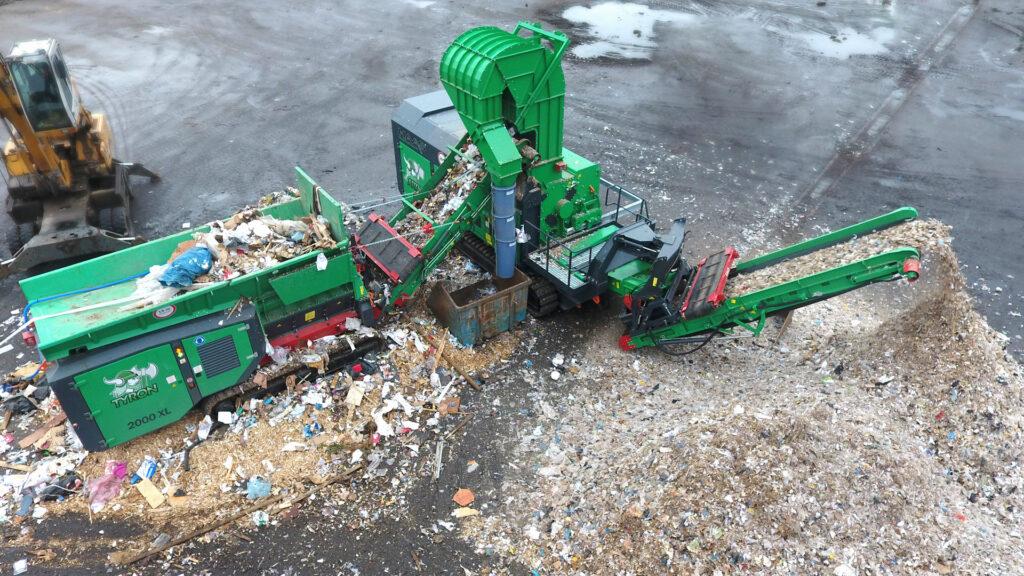
Defined Output Sizes Directly On Site
High Throughput, Flexible Applications, and Maximum Availability
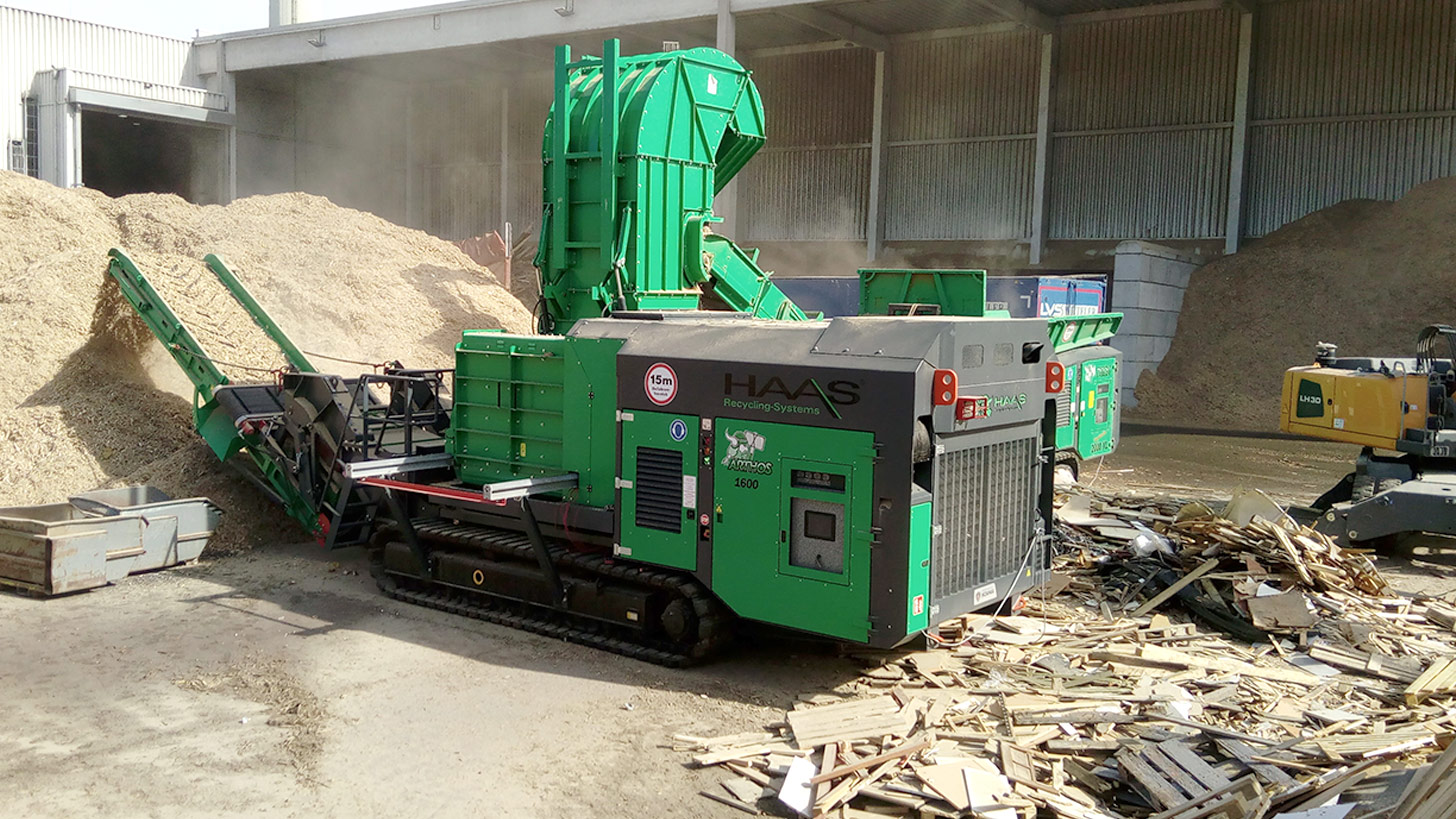
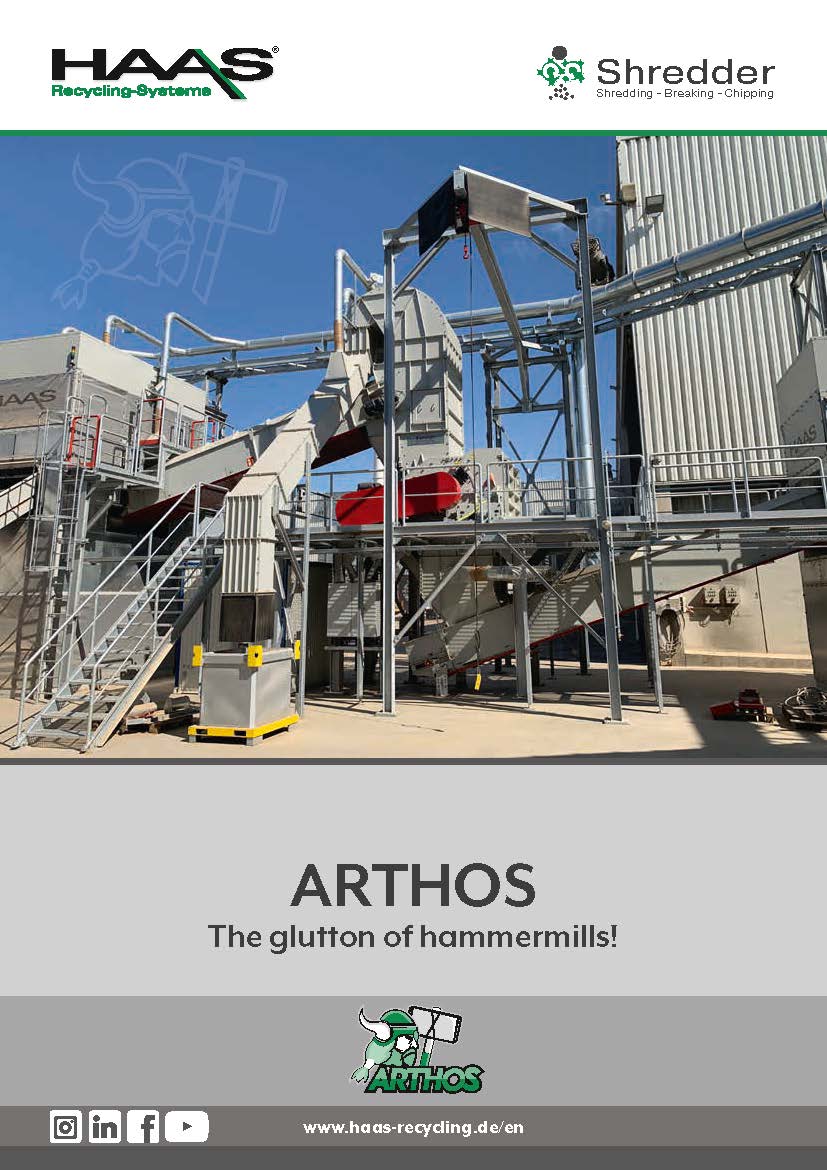
The ARTHOS performs the secondary shredding of pre-processed materials and produces defined output particle sizes for further processing or energy recovery.
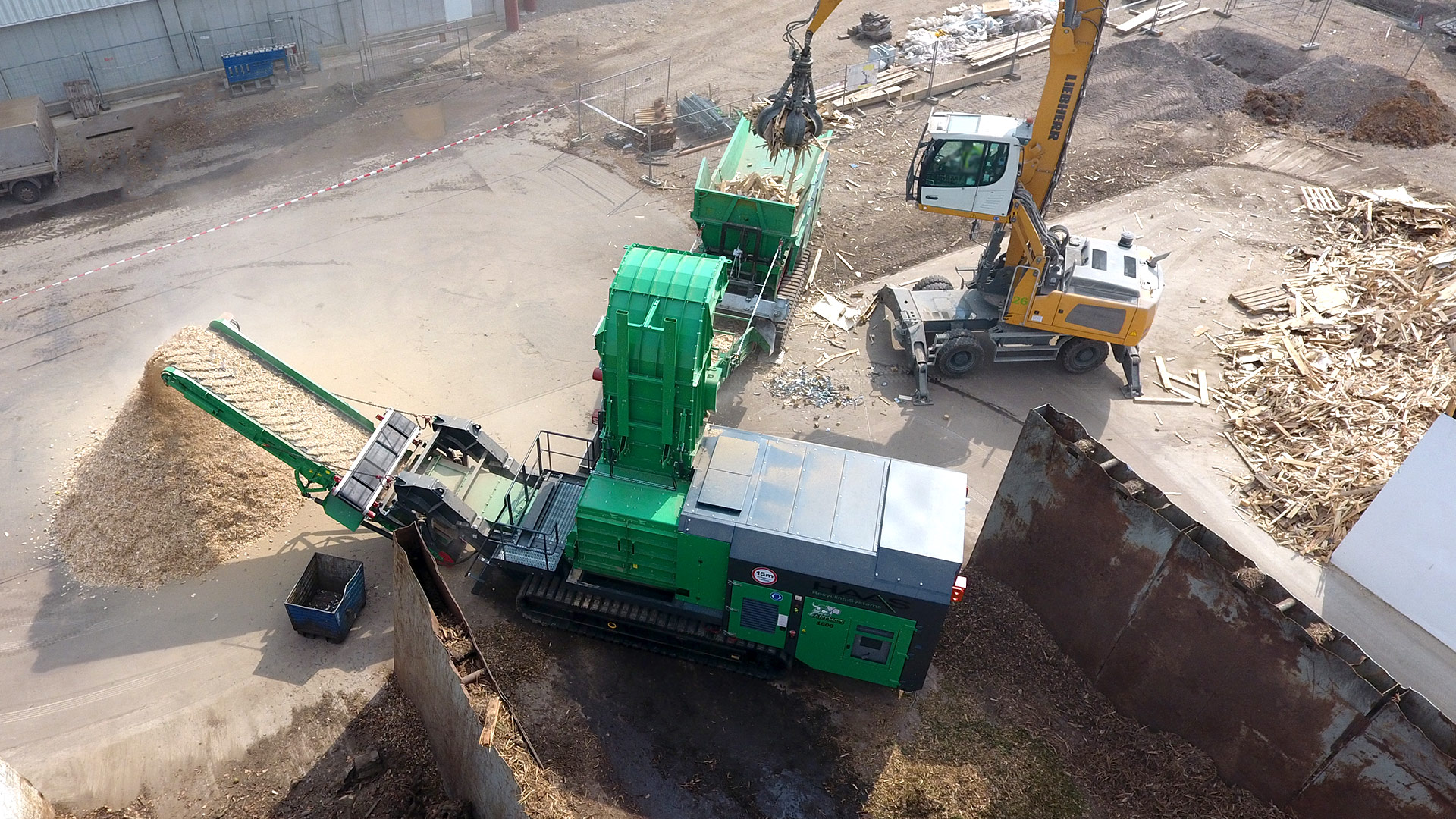
In combination with the TYRON, it forms a powerful processing line, from primary shredding to a defined end product. Depending on the material and tool configuration, different particle sizes and material-specific end products can be produced.
A key advantage is the machine's high resistance to impurities. Foreign objects such as embedded ferrous (Fe) and non-ferrous (NE) metals (e.g. nails, screws, fittings, and hardware) are exposed as far as possible during the shredding process. Large impurities are automatically ejected via the ballistic discharge hood without requiring the machine to stop. This reduces downtime and increases operational availability.
The ballistic chute is a purely mechanical protective feature designed to limit potential damage to the machine caused by larger foreign objects. Whether such objects are ejected depends on the specific material properties and process conditions, and this is not guaranteed for all types of contaminants.
The hammers and hammer shafts can be replaced quickly and easily. Rotor and hammer sets are optionally available with wear caps for enhanced durability.
Thanks to its crawler track system, the mobile hammermill remains highly flexible for use at changing operating locations.
Advantages:
- Defined final particle sizes for a wide range of applications
- High throughput capacity
- Flexible particle sizes through different screen configurations
- Material-dependent exposure of trapped ferrous and non-ferrous materials (e.g. nails, screws, fittings)
- Ballistic chute as a protective function to minimise damage to the machine
- High operational availability
- Ideal complement to the TYRON primary shredder in stationary processing lines
What are the benefits of the ballistic chute?
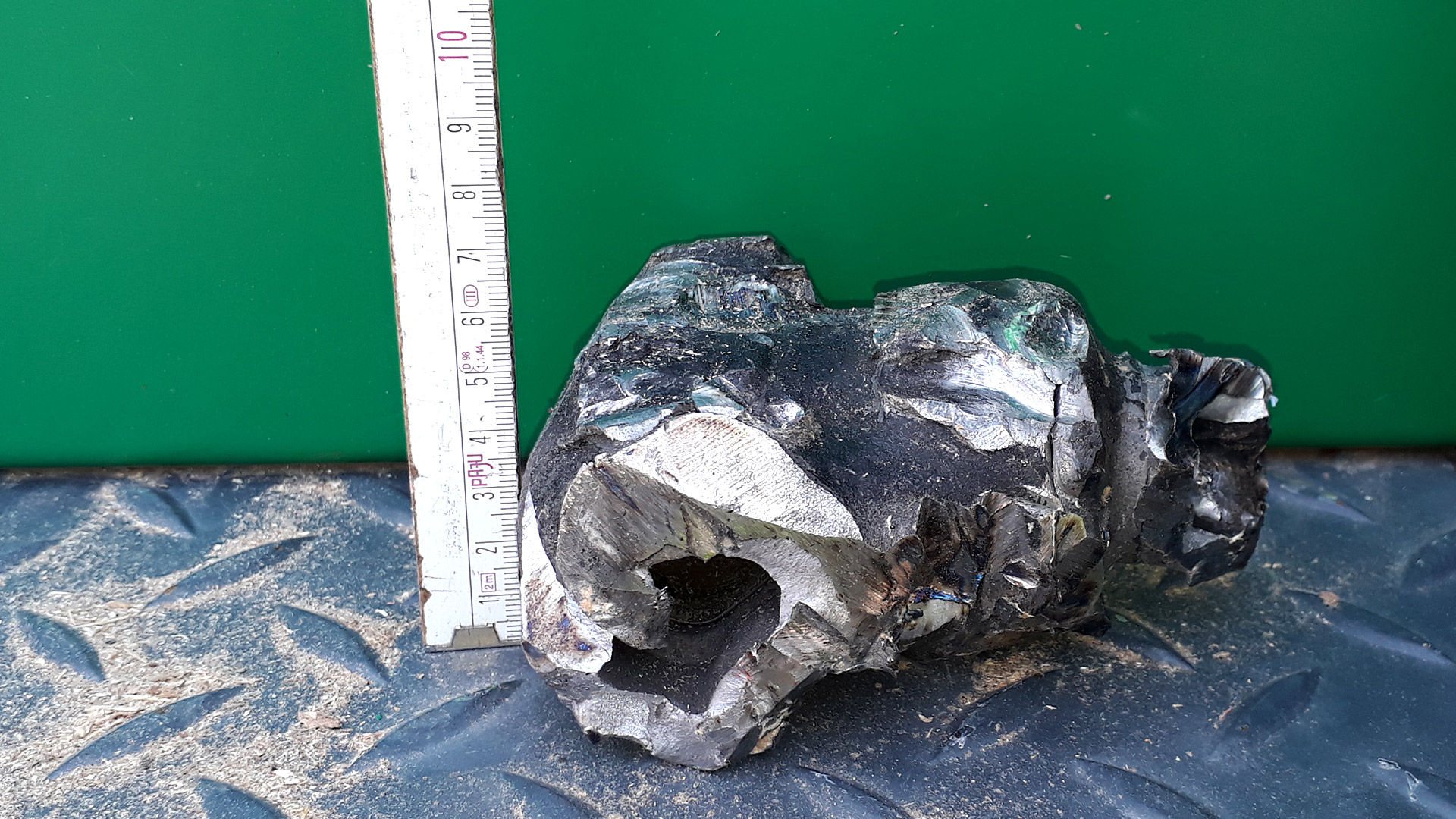
Waste wood, commercial waste and other feed materials may contain heavy impurities such as metal parts and bolts. If these enter the shredding process uncontrolled, they can damage machine components, cause increased wear or trigger unplanned downtime.
The ARTHOS’s ballistic chute serves as a purely mechanical protective measure and enables the material-dependent ejection of certain larger and heavier foreign objects whilst the machine is in operation. This helps to reduce machine damage and downtime. The ballistic chute does not guarantee the complete removal of foreign objects.
Benefits
- Material- and process-dependent ejection of certain larger foreign objects
- Mechanical safety function
- Reduction of potential machine damage and wear
- Reduction of unplanned machine downtime
- Ejection during operation without manual intervention

Heavy and compact foreign objects are selectively separated from the material stream within the ballistic discharge hood.
While the target material continues through the normal processing path, heavy and compact impuritities are diverted into a separate discharge area..
Typical Impurities
- Steel parts
- Bolts and screws
- Tool fragments
- Other heavy metal objects
The result is a cleaner material stream for downstream processing stages.
Every unplanned machine shutdown results in additional costs and operational disruption.
By removing heavy impurities at an early stage, potential damage events in downstream processes can be significantly reduced. At the same time, the risk of unexpected interruptions caused by damaged conveyor components or processing equipment is minimized.
Benefits for operators
- Increased operational reliability
- Protection of downstream equipment
- Reduced maintenance and repair requirements
- More stable material processing
The ballistic chute is particularly suitable for material streams with a high level of impurities.
Typical applications
- Waste wood processing, e.g. railway sleepers with heavy steel plates
- Commercial and industrial waste
- Bulky waste
- Biomass containing foreign materials
Every material stream presents unique challenges when it comes to contaminant separation.
We would be pleased to evaluate together whether the Ballistic chute is the right solution for your application. Take advantage of a material test or speak with our experts about reference installations and practical experience gained from comparable applications.
What Are the Benefits of the Easy Screen Change System?
Requirements for the final particle size can change quickly depending on the material being processed and its intended application. Different screen configurations can be used to achieve the desired product quality.
The easy screen change system of the HAAS ARTHOS hammermill provides easy access to the screening area and enables fast and straightforward replacement of screens.
Benefits
- Fast access to the interior of the hammermil
- Simplified screen replacement
- Reduced downtime during product changes
- Greater flexibility for varying material requirements
- Supports adjustment of particle size to meet specific application needs

The ARTHOS screen assembly can be opened hydraulically for maintenance and screen replacement.
This provides convenient access to the entire screening area. Installed screens can be removed quickly and replaced with screens featuring different hole sizes or specifications.
As a result, the machine can be easily adapted to different material types and desired end products.
Whether processing waste wood, biomass, or commercial waste, different materials require different output particle sizes.
Thanks to the easy screen change system, processing operations can be adapted rapidly to new requirements without extensive machine modifications.
Typical Reasons for Changing Screens
- Changing the desired final particle size
- Adapting to different feed materials
- Optimizing downstream processing steps
- Seasonal or project-related material changes
The most suitable screen configuration for your application depends on both the material being processed and the required final particle size.
Our experts will be pleased to advise you on the optimal screen design for your application or demonstrate the flexibility of the ARTHOS through a material test.
Technical Data
- Einlaufbreite 1,600 mm
- Rotor Ø 1,200 mm
- Antriebsleistung 566 kW
- Durchsatz Up to 55 t/h*
- Gewicht 40 t
* Throughput capacity is based on an average output particle size of 60 - 80 mm, under normal, continuous feeding conditions and with an average level of material contamination.
The videos show the mobile ARTHOS processing different materials – in combination with the TYRON as a mobile processing solution.
ARTHOS: MOBILE SECONDARY SHREDDING OF WASTE WOOD
The mobile ARTHOS processes pre-shredded waste wood into a consistent, defined final fraction.
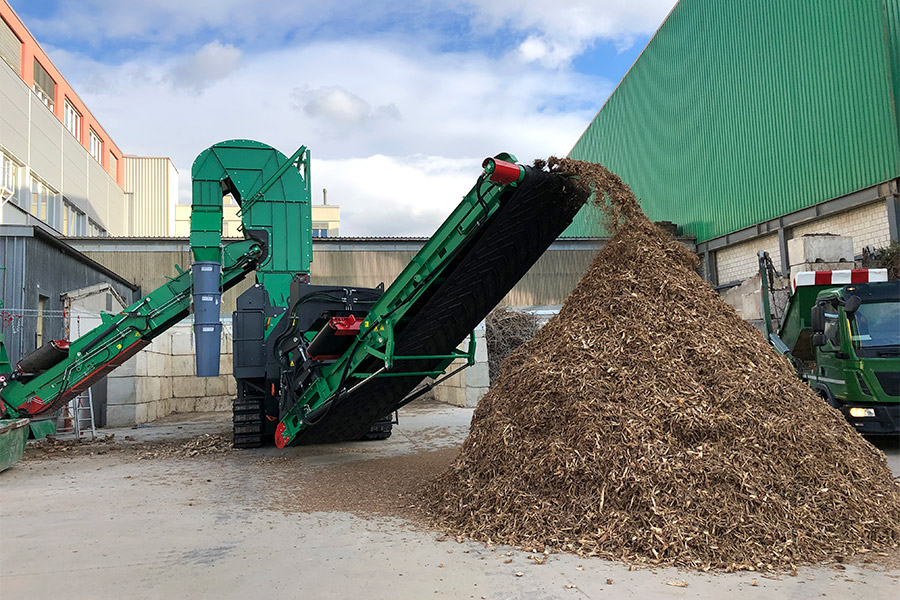
ARTHOS and TYRON: MOBILE WASTE PROCESSING
Working together directly on site, the TYRON and ARTHOS handle the primary and secondary shredding stages as a mobile processing solution.